
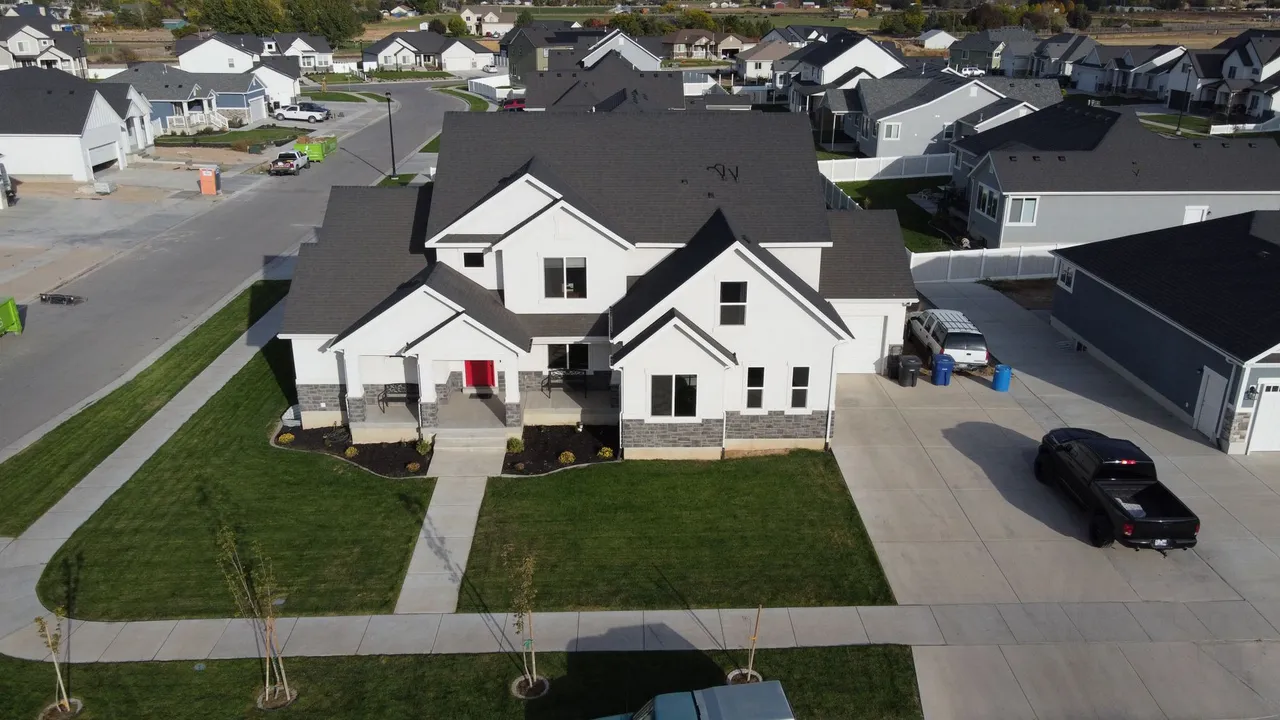
What You Need to Know Before Your First Enquiry
A driveway crossover connects your private driveway to the public road across the nature strip and kerb. Before you contact any contractor, knowing who is responsible for which part of the work, what your council requires, and whether a permit is needed will make every conversation more productive—and may prevent costly rework.
The sections below walk through the three preparation areas that matter most: understanding your boundary situation, working out responsibility, and checking approval requirements with the relevant authority.
Why the Crossover Is Not Simply Your Driveway
Many homeowners assume their driveway ends at the front of their property and that anything beyond the boundary fence is someone else’s concern. In practice, the crossover typically spans public land—the nature strip, kerb, and sometimes the road edge—which means council specifications and public infrastructure requirements often apply to it.
For example, the City of Port Adelaide Enfield describes owner responsibility for constructing, repairing and maintaining a crossover according to council requirements. This is not a universal rule across every Adelaide council, but it illustrates a common pattern: the work crosses a boundary between private and public land, and the standards that apply to public land travel with it.
Understanding this distinction early stops you approaching a crossover project the same way you might approach resurfacing an internal driveway slab. See our guide on planning driveway drainage questions for related considerations once the crossover scope is clearer.
Gather Your Boundary Information First
Before you can describe your project accurately to a contractor or council officer, you need a basic picture of your site:
- Property boundary position. A copy of your Certificate of Title or a survey plan shows where your legal boundary sits relative to the kerb. This matters when a quote refers to “driveway works” without specifying whether the crossover portion is included.
- Nature strip width. Measure from your front boundary to the kerb face. This affects both the volume of work and whether any underground services—water, electricity, telecommunications—may be in the zone.
- Existing crossover condition. Note whether the current crossing is a poured concrete channel, a rolled asphalt lip, a precast kerb ramp, or some older informal arrangement. Some councils require a specific construction type.
- Kerb profile. A mountable kerb and a barrier kerb are treated differently by councils when calculating the crossover design. Photographs help a contractor understand the starting point without a site visit.
Having this information ready reduces back-and-forth and allows contractors to give you a more accurate scope when you submit a concrete driveway enquiry or an asphalt driveway enquiry.
Understanding Responsibility Questions
The question of who pays for and who must approve crossover work is not always straightforward. A useful way to think about it:
Hypothetical scenario (not a customer story): Imagine a homeowner in a northern Adelaide suburb who wants to widen their existing single-car crossover to accommodate two vehicles side by side. The private driveway portion is entirely their responsibility. The kerb cut and nature strip section, however, may require council approval, may need to be constructed or inspected by a council-approved contractor, and could affect a stormwater gutter. Three separate responsibility questions exist within what looks like one job.
Typical responsibility questions to clarify before enquiring:
- Who constructs the kerb cut? Some councils do this work themselves or require their own contractor; others permit licensed private contractors to do it after approval.
- Is the nature strip crossing the owner’s responsibility to maintain? As noted above in the PAE example, this is common—but check your own council.
- The Town of Gawler describes stormwater affecting neighbours outside a recent development application as a civil matter between property owners. Council permission for crossover work or a stormwater connection to the street kerb is a separate question. Altering a crossover can redirect surface water in ways that affect adjoining properties.
- What happens if underground services are present? Before You Dig Australia (BYDA) enquiries are a standard pre-construction step; a reputable contractor will raise this, but knowing it is required helps you ask the right questions.
Our driveway replacement checklist covers some of these ownership and scope questions in a broader replacement context.
Permission Checks with Authorities
South Australia has multiple planning assessment pathways, and what applies to your crossover depends on your proposal and the planning framework covering your property. This means you cannot assume approval is automatic, nor can you assume it is required—it is site-specific.
What you can do before making enquiries:
- Contact your council’s development or engineering services team directly. Ask whether your planned crossover change requires a formal application, an engineering approval, or simply a notification. The City of Prospect, for instance, requires authorisation for installing, modifying or relocating a driveway and gutter crossover on public land—and other councils have their own versions of this requirement.
- Check the PlanSA planning portal. PlanSA provides access to assessment pathway guidance for South Australian development proposals. Your council’s planning team can help interpret how this applies to your site.
- Ask about material and design standards. Councils often specify minimum widths, crossfall limits and construction materials for crossovers. These specifications come from the responsible authority, not from this site, and they vary between councils and sometimes between zones within a council area.
- Confirm whether a licensed contractor is required for the public-land portion. The SA Government recommends checking whether a builder is licensed for the particular work and asking for explanations of unclear contract terms—a useful habit when crossover work involves public infrastructure.
If your project extends beyond the crossover to a full driveway replacement, our concrete or asphalt driveway planning guide and how to compare driveway quotes provide preparation context for those conversations.
A Pre-Enquiry Preparation Checklist
Use this list before contacting a contractor or council officer. It is a general prompt, not a site-specific engineering checklist.
- Copy of Certificate of Title or survey plan showing boundary
- Measured nature strip width (boundary to kerb)
- Photographs of existing crossover from both road and driveway sides
- Note of kerb type (mountable vs. barrier)
- Confirmation of which council area the property falls within
- Record of any previous council correspondence about the crossover
- DBYD enquiry submitted (or noted as a step to complete)
- Written list of what you want changed—widen, relocate, resurface, full replacement
Drainage and Surface Water Considerations
Crossovers sit at the lowest point where your driveway meets the public road system, making drainage a practical concern. Changes to the crossover level or profile can affect how water moves during heavy rain—both onto your property and toward neighbours or the road. This is worth raising explicitly with both your contractor and your council officer during the planning stage.
Our guide on planning driveway drainage questions covers the broader driveway drainage topic in more detail.
Ready to Move Forward?
Once you have your boundary information, a clear picture of responsibility, and an understanding of what approvals may be needed, you are well placed to have a productive first conversation. Use our enquiry forms to connect with contractors for concrete driveway work, asphalt driveway work, or driveway replacement and upgrades. This site is a referral platform, not the contractor; the contractors you connect with are responsible for assessing your site and advising on specific construction requirements.
Further Reading
- City of Port Adelaide Enfield – Footpath and driveway services
- City of Prospect – Undertaking work on council land
- PlanSA – Assessment pathways
- SA Government – Choosing a building professional
- Town of Gawler – Land development
Discuss your project
This guide helps prepare questions; it is not a site assessment, design specification or professional approval. Read about driveway replacement enquiries in adelaide before making a project enquiry.