
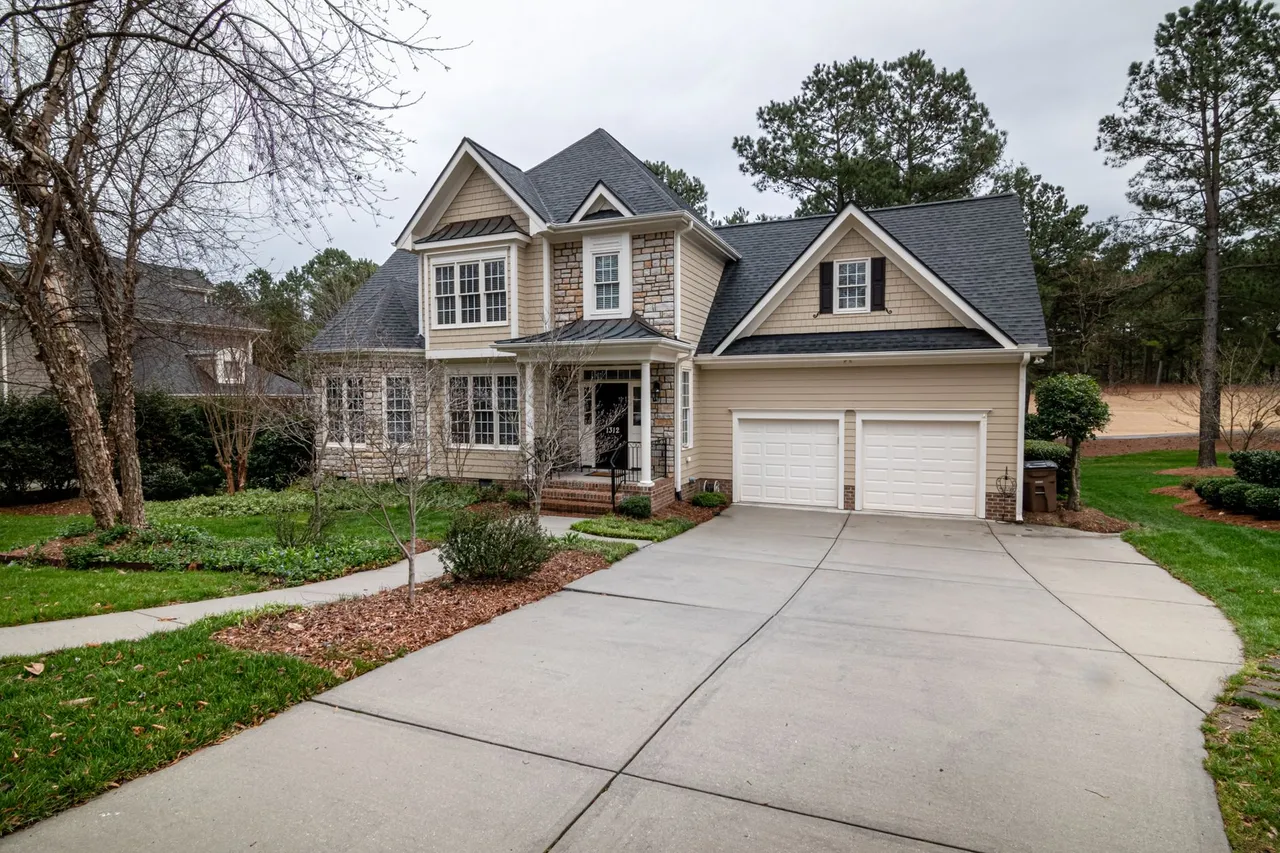
Both concrete and asphalt can make an excellent Adelaide driveway — the right choice depends on how the surface will be used, the site conditions, your finish preferences and what your council requires for the crossover. Understanding those factors before you request quotes helps you compare proposals meaningfully and avoid surprises once work begins.
How intended use shapes the material decision
The first question worth settling is what the driveway actually needs to handle. A single-vehicle suburban driveway has very different demands from a double-width surface that doubles as a basketball court, or an access track that takes delivery vehicles.
Concrete is a rigid slab: load is spread across the panel rather than transmitted directly into the base. That rigidity is an advantage under heavy or repeated loads, but it also means that if the sub-base shifts — a real consideration in Adelaide’s clay-rich soils — cracking becomes visible and repair involves cutting and patching individual sections.
Asphalt is a flexible pavement. It can accommodate minor sub-base movement through slight deflection rather than cracking, which is why it has long been used on road networks. That flexibility comes with a trade-off: in sustained heat, unshaded asphalt can soften slightly and show tracking marks from vehicle tyres or jack stands. Adelaide summers make this worth discussing with any contractor before you commit.
If your driveway includes a sharp turn or a steep slope, the structural requirements shift further. See our guide on planning a sloping driveway for more on what gradient can mean for drainage and surface choice.
Council crossover requirements: an often-overlooked step
The section of driveway that crosses the footpath and kerb — the crossover — is not simply private property. Council specifications for crossover construction, repair and maintenance can apply even when you are only replacing your internal driveway surface.
Port Adelaide Enfield, for example, makes clear that property owners are responsible for constructing, repairing and maintaining their crossover in accordance with council requirements. The City of Prospect requires authorisation before relevant alterations to public land, including installing, modifying or relocating a driveway and gutter crossover. Gawler identifies crossover and stormwater connections as matters that can require council authorisation.
Those examples are council-specific and not universal; requirements vary across Adelaide’s local government areas. Before any work starts, contact your own responsible council to confirm whether a permit or authorisation is needed, what materials are acceptable for the crossover portion, and whether the crossover needs to be replaced or upgraded as part of your project.
South Australia also has multiple development assessment pathways under PlanSA; whether a driveway project requires a formal development application depends on the proposal and the applicable planning policy for your site. A contractor experienced in Adelaide residential work can often flag when a formal application is likely needed, but the final verification is a conversation with council or a registered building professional.
Finish and appearance options
One practical reason homeowners lean toward concrete is the range of decorative finishes available: exposed aggregate, broom finish, stencilled patterns and colour-through or surface-applied oxides. These can complement a home’s exterior in ways that plain grey asphalt cannot easily match.
Asphalt is predominantly laid in black or very dark charcoal and relies on its clean, uniform surface for visual appeal. Some contractors can apply a coloured sealcoat, but options are more limited. If a consistent dark surface that integrates with a modern or contemporary streetscape is the goal, asphalt achieves that efficiently.
Surface texture also affects slip resistance and tyre noise. A broom-finished concrete surface provides good grip; exposed aggregate provides even more. Standard asphalt has an open-textured surface that handles grip well in most residential situations.
Base preparation: where both materials live or die
Whichever surface you choose, the structural performance depends almost entirely on what happens beneath it. Adequate base preparation — including compaction, appropriate base depth and sub-base treatment suited to the soil — is not an area to economise on. A new surface over a failed or under-prepared base will show problems regardless of material quality.
This is worth asking about explicitly when comparing quotes. Our guide on how to compare driveway quotes covers what line items to look for and which omissions are a warning sign.
Drainage: water has to go somewhere
Both concrete and asphalt are impermeable surfaces, so a driveway installation changes where rainwater goes. Good design directs runoff away from the house and foundation, and toward an appropriate outlet — not across the footpath or onto a neighbour’s property.
The Town of Gawler describes stormwater affecting neighbours outside a recent development application as a civil matter between property owners. Council permission for crossover work or a stormwater connection to the street kerb is a separate question. The same principle applies across Adelaide: where drainage goes once it leaves the driveway matters for council compliance and neighbour relations alike.
If your site has an existing drainage challenge — a low point, a natural water path, or a crossover that channels water poorly — it is worth raising this before the project is scoped. The guide on planning driveway drainage questions walks through what to ask a contractor before work begins.
Hypothetical planning scenario
The following is a hypothetical example to illustrate decision factors, not a customer story.
Imagine a homeowner in an inner-northern Adelaide suburb who wants to replace a cracked concrete driveway with a wider surface to fit two cars. The site has:
- A crossover within a council-managed verge requiring council authorisation before alteration
- A slight fall toward the house rather than away from it
- A dark-coloured home exterior where black asphalt would suit aesthetically
- Clay sub-soil that expands seasonally
In this scenario the homeowner would need to: contact council before any crossover work; include a drainage re-grade in the scope to redirect runoff away from the foundation; choose between asphalt (which suits the aesthetic and handles clay movement with some flexibility) and concrete (which could also work if the base is properly prepared and expansion joints are placed correctly). Neither material is automatically superior — the site conditions and council requirements shape the answer more than the material catalogue does.
Comparing quotes for concrete vs asphalt
When you receive quotes for either material, useful things to compare include:
- Whether the crossover is included, excluded or treated as a separate council-managed item
- What base preparation and compaction method is specified
- How drainage is handled and where water is directed
- Whether edging, formwork or saw-cut joints are included for concrete
- Whether a sealcoat is included for asphalt, and when it should be applied after laying
- The warranty offered on workmanship versus materials
SA Government guidance advises consumers to check whether a contractor is licensed for the specific work being undertaken and to ask for clarification of any contract terms that are unclear. Verifying licence status directly with the relevant authority is a step that sits with the homeowner, not a referral website.
If your project involves replacing an older driveway, our driveway replacement checklist covers scope decisions that commonly get missed in early conversations with contractors.
Ready to get contractor proposals? Use the enquiry forms for Concrete Driveway Enquiries, Asphalt Driveway Enquiries or Driveway Replacement and Upgrades to connect with contractors serving Adelaide.
Further reading
- SA Government – Choosing a building professional: https://www.sa.gov.au/topics/housing/buying-building-selling/building-a-home/choosing-a-building-professional
- PlanSA – Assessment pathways: https://plan.sa.gov.au/development_applications/getting_approval/how_applications_are_assessed/assessment_pathways
- City of Prospect – Work on council land: https://www.prospect.sa.gov.au/development/new-developments/undertaking-work-on-council-land
- Port Adelaide Enfield – Footpath and driveway services: https://www.cityofpae.sa.gov.au/services/footpath-driveway-services
Discuss your project
This guide helps prepare questions; it is not a site assessment, design specification or professional approval. Read about driveway replacement enquiries in adelaide before making a project enquiry.