
How long does a concrete driveway installation actually take?
For a concrete driveway in Adelaide, ask the proposed provider to separate site preparation, forming, placement, finishing, curing and release for access in its written schedule. Duration depends on the actual scope, mix, conditions and intended loads. Obtain project-specific written instructions for pedestrian access and vehicle use; the pour date alone does not establish when the driveway is ready. Confirm how approvals, excavation, materials scheduling and weather affect the proposed sequence.
This guide walks through the typical work sequence, what access restrictions to expect at different stages, and the kinds of questions worth raising with any contractor before work begins.
The work sequence before concrete is poured
Installation does not begin with the concrete truck. Several preparatory steps shape whether the finished slab performs well over time.
Site assessment and scoping — Before quoting, a contractor needs to assess the existing surface, sub-base condition, gradient, drainage requirements and whether the project extends onto council-controlled land at the street boundary. These details affect both the work method and the timeline.
Approvals and council notification — If your driveway crossover connects to a public road reserve or kerb, the work involves more than your private property. The City of Prospect, for example, requires authorisation for installing, modifying or relocating a driveway and gutter crossover on public land. Port Adelaide Enfield similarly places responsibility on owners to construct or repair a crossover in accordance with council requirements. Gawler identifies crossover and stormwater connections as matters requiring council authorisation. South Australia also has multiple development assessment pathways, and requirements depend on the specific proposal and planning framework that applies to your site. What this means in practice: check with your own council before assuming work can begin immediately. Approval timelines vary and are outside any contractor’s control.
Demolition and excavation — Existing concrete or asphalt must be broken up and removed. Excavation depth depends on the sub-base design your contractor specifies. This stage produces noise, dust and vehicle movements, and the driveway will be impassable.
Sub-base preparation — Compacted base material is laid and levelled. Poor preparation at this stage is a common cause of cracking and settlement later. It is worth asking any contractor explicitly how they prepare the base and what compaction standard they aim for.
Formwork and reinforcement — Timber or steel forms define the slab edges and finished levels. Steel mesh or bar reinforcement is placed according to the design. Edge detailing and expansion joint placement are set at this point.
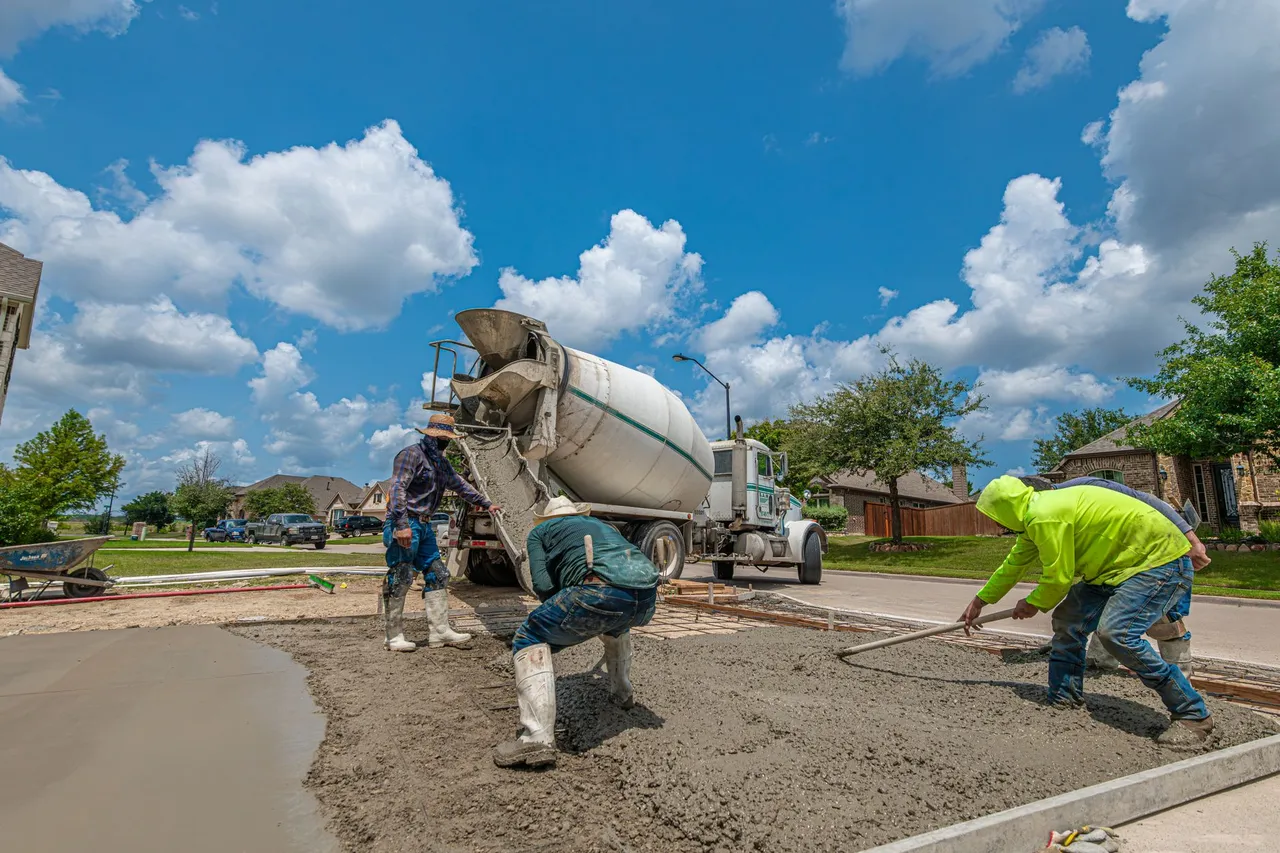
Pour and finishing — Concrete is delivered and placed. Surface finishing — whether broom, exposed aggregate or another texture — happens while the material is still workable. This is a time-critical phase and weather conditions matter considerably.
Access restrictions to plan around
A concrete driveway project creates genuine access disruption. Planning around it reduces frustration.
- During excavation and formwork: The driveway is completely unusable. Vehicles need off-site parking. Pedestrian access through the site may also be restricted for safety.
- Immediately after the pour: Fresh concrete must not be walked on or driven over. The contractor will typically barrier the area. Foot traffic restrictions typically last at least 24 hours; vehicle access considerably longer.
- During the cure period: Even after the surface looks and feels hard, the concrete continues to develop strength. Driving on it too early is a common cause of surface damage that cannot be reversed. Your contractor should give you a specific instruction for your slab before they leave site.
- If a crossover is included: Council inspections or sign-offs on public infrastructure can add a waiting step before the crossover is fully usable.
Hypothetical scenario for illustration: Imagine a household that books a pour for the Thursday before a long weekend, expecting to use the driveway by Sunday for a family gathering. The contractor finishes on Thursday, but the provider has not released the surface for vehicle access. The long-weekend timing means no vehicles can park on the property for several days. This hypothetical timing mismatch shows why access arrangements need confirmation before booking.
What to discuss with a contractor before signing anything
South Australian consumers can check whether a contractor is appropriately licensed for the work and ask for plain-language explanations of any unclear contract terms. A referral service like this one is not a licensing authority — verifying a contractor’s credentials is a step you take directly with the relevant body or the contractor themselves.
Specific timing questions worth raising:
- What is the realistic total timeline from approval to completion for my site?
- How many days will the driveway be completely inaccessible?
- When can I walk on it, and when can vehicles use it?
- What weather conditions could cause a delay or affect quality?
- Who is responsible for council notification and crossover approval — the contractor or me?
- The Town of Gawler describes stormwater affecting neighbours outside a recent development application as a civil matter between property owners. Council permission for crossover work or a stormwater connection to the street kerb is a separate question.
- What does the warranty or defect liability period cover, and for how long?
If you are comparing multiple quotes, asking these questions of each contractor lets you compare not just price but method and professionalism. See our related guide on concrete driveway cost questions for a breakdown of what typically drives pricing variation.
Finish and material choices that affect timing
Some finish options add time to the job. Exposed aggregate requires surface washing at a specific point in the cure, so the contractor needs to return or plan for it. Coloured concrete may require sealing after the initial cure. Stencilled or stamped finishes involve additional steps during the pour window itself.
If you are considering these options, raise them before quoting — not after. See our guides on exposed aggregate driveway selection, coloured concrete sample selection and concrete driveway finish options to discuss for practical background on what each involves.
Replacement versus new installation timing
If an existing driveway is being replaced, demolition and removal adds time and cost compared with laying on bare ground. The condition of the sub-base under the old slab also becomes relevant — if it has shifted or failed, remediation is needed before the new pour, and that cannot always be assessed until the old concrete is removed.
For properties considering asphalt as an alternative — which has a different cure and access timeline — see Asphalt Driveway Enquiries or our Driveway Replacement and Upgrades service page.
Getting a quote that reflects your actual timeline
The best quotes are specific — they describe the scope, the sequence, the access restrictions and the milestones, not just a price and a start date. If a quote does not address how long the driveway will be out of action or who handles council requirements, ask before signing.
To connect with contractors for concrete driveway installation in Adelaide, use our Concrete Driveway Enquiries page to submit a project enquiry.
Further reading and sources
- SA Government — Choosing a building professional
- City of Prospect — Work on council land
- Port Adelaide Enfield — Footpath and driveway services
- Town of Gawler — Land development
- PlanSA — Assessment pathways
Discuss your project
This guide helps prepare questions; it is not a site assessment, design specification or professional approval. Read about concrete driveway enquiries in adelaide before making a project enquiry.