
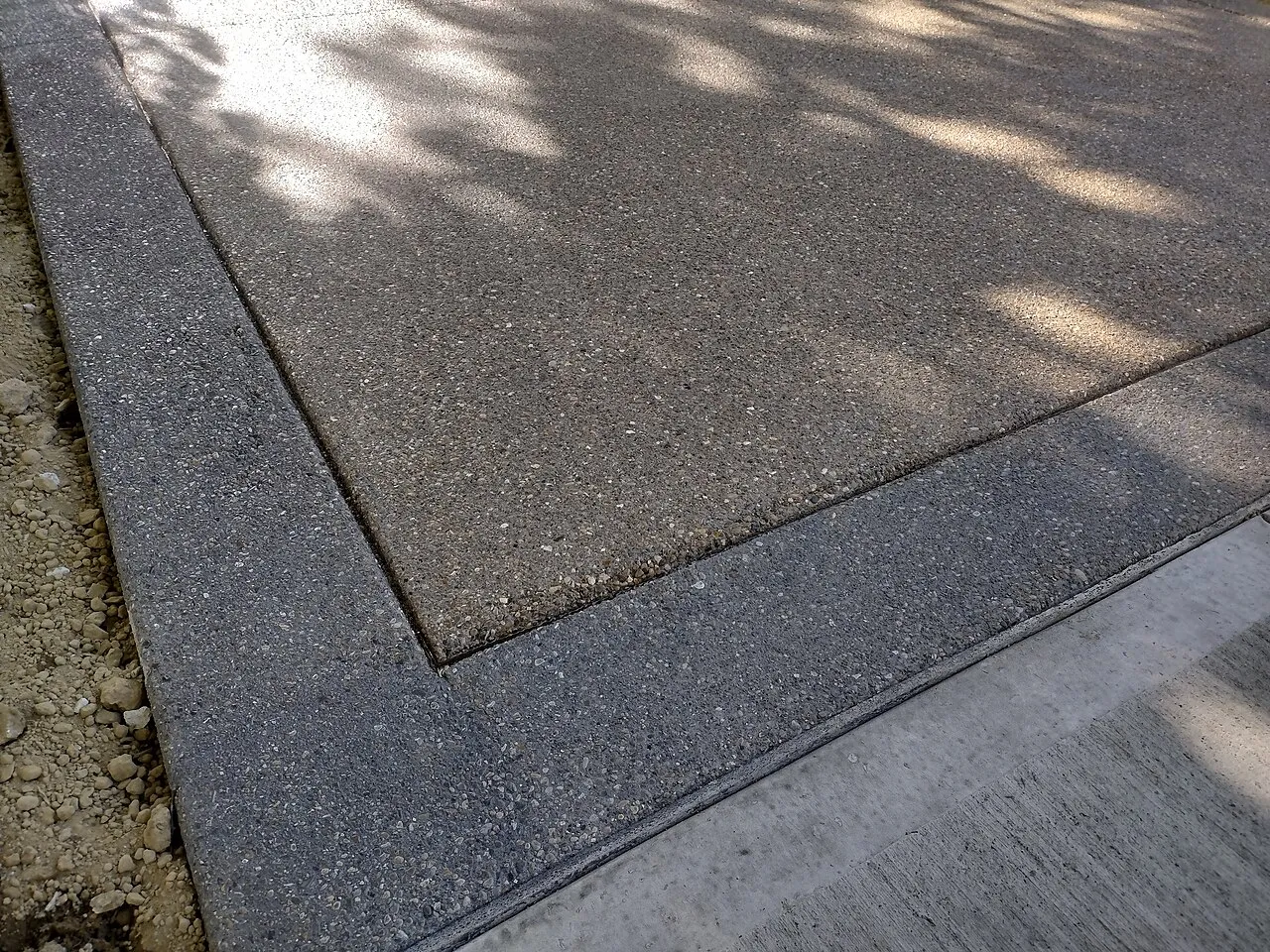

Comparing concrete driveway colours is a process of choosing between visible alternatives for your property, then recording what you prefer and what still needs a provider’s confirmation. Start with actual samples and the materials that will remain around the driveway. This guide provides a comparison worksheet; the separate coloured concrete selection guide covers taking an approved selection into the proposed scope and product documentation.
Start with colour families, then verify an actual sample
For an Adelaide shortlist, Boral’s Colori range offers useful examples of colour families: neutrals and greys, warm earth tones, brighter colours, greens and blues, and dark tones. Its named examples include Silver, Latte, Desert Red and Charcoal. These are supplier-specific references, not a promise that a particular mix or finish is available for your property. Ask the proposed supplier about current local availability. Boral warns that natural aggregates affect appearance and recommends physical samples; screen colours are only a guide. Compare the actual proposed sample beside your retained frontage materials before recording a preference.
Decide what the colour needs to relate to
List the fixed elements beside the driveway before collecting more options. These might include the house brickwork or render, garage door, front steps, boundary wall, existing path and established planting. Identify which are staying and which are only proposed. A comparison based on a garage-door colour that you later change is a different brief from one based on the door already installed.
Describe your aim in ordinary language. You might want the driveway to recede beside the house, create a clear contrast with the entrance, or relate to an existing path. These are preferences to explore, not guarantees that a particular colour will produce a particular result. Ask everyone making the decision to agree on the priority before shortlisting individual shades.
A photograph of the frontage is useful for explaining that aim, but it is not a product sample or proof of the final appearance. Keep the photograph with your notes and ask the provider what physical reference it can supply for the proposed finish.
Compare a small shortlist consistently
Give each alternative a simple reference, such as Option A, Option B and Option C. Record the supplier’s actual product or sample reference alongside it. Informal descriptions such as “the grey one” can become confusing when several samples, screens and conversations are involved. If you cannot identify the sample later, you cannot reliably explain which option you meant.
View the alternatives together in the locations that matter to you, rather than judging each one on a separate visit from memory. Note where you placed them, the surrounding materials and the viewing conditions. This is a way to organise your own observations; it does not establish how an unbuilt driveway will perform or appear.
Ask the provider whether the references being compared represent the same type of finish. If one reference involves a different product, surface treatment or aggregate, label that distinction rather than attributing every visible difference to colour alone. The provider should explain what each reference actually represents before you make a selection.
Use a comparison sheet instead of a ranking from memory
The following worksheet keeps the alternatives and unanswered questions in one place. Adapt the rows to your property rather than treating it as a technical assessment.
| Comparison question | Option A | Option B | What needs confirmation? |
|---|---|---|---|
| What is the actual sample or product reference? | Record reference | Record reference | Can the provider identify it? |
| How do I describe it beside the house finish? | Write an observation | Write an observation | Is this the finish being proposed? |
| How does it relate to the garage door and entrance? | Write an observation | Write an observation | Are those adjoining selections final? |
| What changes when viewed from the street? | Write an observation | Write an observation | Is a larger reference available? |
| What do the decision makers prefer, and why? | Record reasons | Record reasons | Which concern remains unresolved? |
Avoid recording only “best” or “worst”. A note such as “we prefer the contrast beside the entrance, but have not compared it with the retained path” gives the next conversation a useful purpose. It also explains why a preference might change after another part of the frontage is considered.
Separate observation from an assumption
Keep two columns in your notes: what you can see in the supplied reference, and what you want the provider to explain. You can describe visible tone, pattern and texture. You cannot establish a product’s suitability, maintenance requirements or final installed result simply by looking at it.
For example, if two references differ in sheen, ask what treatment each has received and whether that treatment is part of the proposed scope. If one includes visible stones, ask how the supplier identifies that finish. Do not assume that a surface shown in a photograph is the exact material, method or product being quoted.
Ask what limitations apply to the sample. It may be a supplier reference, a photograph or a separate sample panel. Establish what it represents, who supplies it and which details still need to be confirmed. This guide does not promise that a small reference reproduces every feature of a full driveway.
Work through a hypothetical disagreement
Imagine two household members comparing the same alternatives. One prefers Option A because it contrasts with the house. The other prefers Option B because it relates to the existing path. They are applying different priorities, so another pile of samples may not resolve their disagreement.
They return to the brief and decide which relationship matters most. They then record the remaining concern and ask the provider for an appropriate reference or explanation. This hypothetical example illustrates a decision process, not a customer project or a recommendation for a particular shade. The useful outcome is a preference that both people can explain, with its limitations recorded.
Take a clear comparison into the provider conversation
Bring your shortlist, the actual references, frontage photographs and comparison notes to the discussion. Identify which adjoining finishes are fixed and which questions remain open. Ask the provider what information it needs before incorporating a selection into its own proposal. Appearance preferences and the provider’s assessment of the proposed work are separate parts of that conversation.
Before agreeing to a contract, check that the documented work includes what you discussed and ask for explanations of unclear terms. That approach follows SA Government guidance on choosing a building professional. For a separate process covering the selected product and written scope, continue to the coloured concrete selection guide. For comparing overall inclusions and exclusions, use how to compare driveway quotes.
This website publishes planning information and accepts requests for possible provider follow-up where available. It does not select a product for your property, specify a concrete mix or guarantee the appearance of a completed project.
Discuss your project
This guide helps prepare questions; it is not a site assessment, design specification or professional approval. Read about concrete driveway enquiries in adelaide before making a project enquiry.