
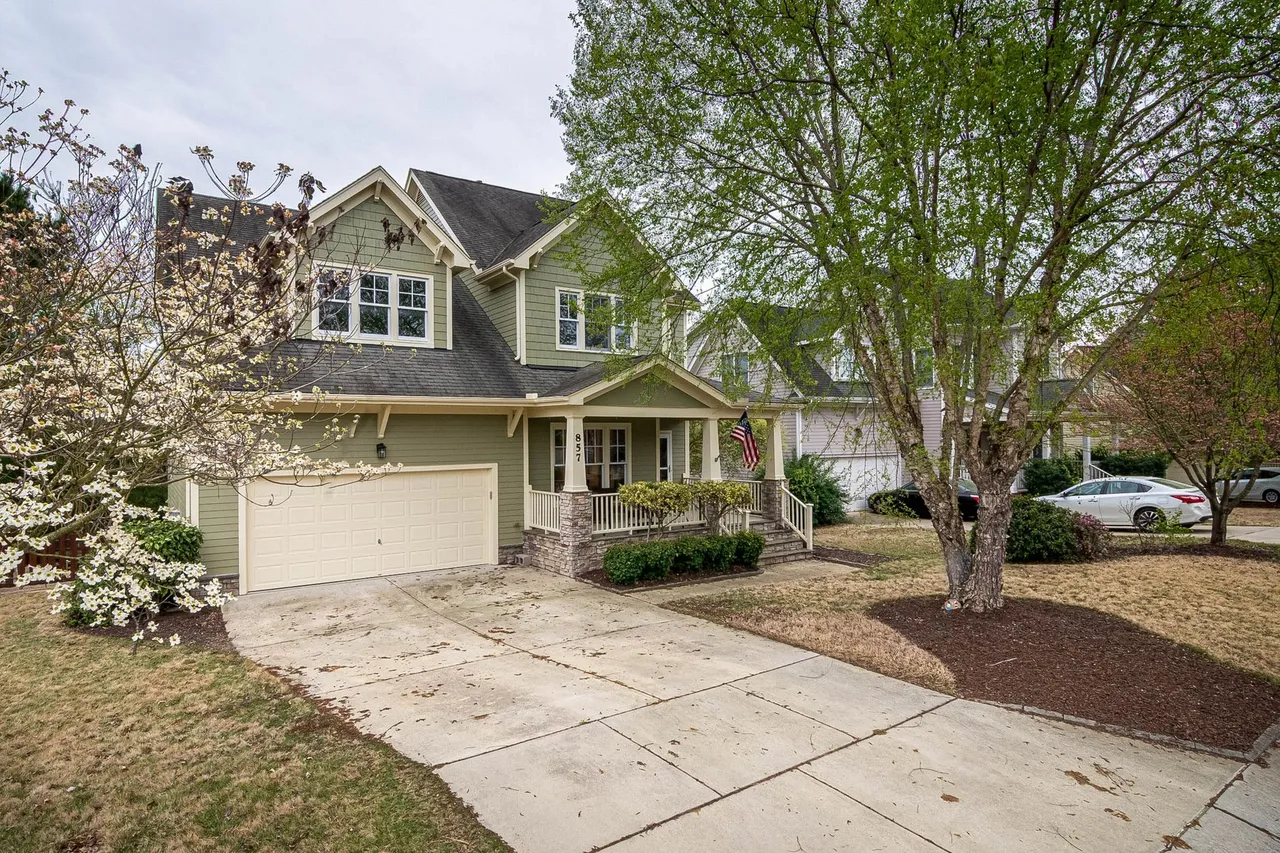
Can driveway trees and a new concrete or asphalt surface coexist?
Yes — but only with deliberate planning before a single sod is turned. Driveway trees in Adelaide regularly cause surface failure when their roots are not accounted for during design and excavation. Getting arborist and concreters input early, mapping root zones against the proposed slab boundary, and understanding what councils require for crossover work gives a project its best chance of a surface that lasts and a tree that survives.
Why trees and driveways create conflict
The problem is not simply that roots lift concrete. Roots grow toward moisture and oxygen, and a new driveway creates exactly the conditions that attract them: compacted subgrade that holds moisture at the edges, joints that allow gas exchange, and consistent shade that slows evaporative drying. Once a root has grown beneath a slab it exerts slow, sustained upward pressure that few residential driveway thicknesses can resist indefinitely.
The reverse damage also matters. Excavation and subgrade compaction for a new driveway can sever or crush the structural roots that keep an established tree stable. A tree that looks unaffected immediately after construction may show stress — crown dieback, branch drop — in the years that follow, as damaged roots decay and lose their anchoring function.
Both failure modes are largely preventable when the people involved — arborist, concreters, landscaper, council — exchange information at the planning stage rather than after.
Mapping existing trees before design
Before a driveway layout is finalised, it helps to understand which trees are within or adjacent to the proposed works area and what their likely root spread is. As a rough working principle (not a site-specific engineering rule), the structural root zone of an established tree often extends well beyond the canopy drip line. A large native or European deciduous tree common in older Adelaide suburbs can have roots extending many metres from the trunk.
An arborist can assess an existing tree and provide a report that identifies its structural root zone, health condition, and what, if any, construction activity can be carried out within that zone without irreversible damage. This report becomes a practical document the driveway contractor can use when setting out the works.
If a tree is on council-managed land — a street tree in the nature strip or one on a public verge — you will likely need to contact your council before any work affecting roots or the surrounding surface takes place. Different Adelaide councils have distinct requirements: for example, Port Adelaide Enfield describes owner responsibilities for constructing crossovers to council specifications, while the City of Prospect requires authorisation before relevant alterations to public land, including driveway and gutter crossover modifications. Always check with your own responsible council rather than assuming one suburb’s rules apply across the metropolitan area.
What proposed excavation does to root systems
A typical driveway installation involves excavation to remove existing material, subgrade preparation, compaction, and then placement of base material and the wearing surface. Each step carries risk to nearby trees.
Trenching and grading can physically sever roots. Even roots that are not directly cut may be damaged by machinery vibration or by the dewatering effect of open excavation on surrounding soil.
Compaction equipment transmits force into the soil profile well beyond the immediate work area. Roots do not need to be broken to be damaged; sustained compaction deprives them of the air spaces their fine root hairs depend on for gas exchange.
Changes to drainage and soil moisture after construction can affect root behaviour. A large impermeable surface redirects stormwater that previously soaked into the root zone. Stormwater outcomes affecting neighbouring properties and public infrastructure require attention — some councils require specific stormwater connection arrangements to be checked before work proceeds.
A hypothetical scenario worth considering: imagine a property with a mature Jacaranda planted 2.5 metres from the proposed driveway edge. The owners assume the tree is far enough away. An arborist visit before work begins reveals the structural roots extend under where the subbase would be compacted. The concreters adjust the slab edge, use a root barrier product along the boundary, and schedule the compaction equipment to avoid the most sensitive zone. The tree and the driveway both perform well years later. This is a planning illustration, not a customer account — but it reflects the kind of coordination that experienced contractors and arborists discuss regularly.
Choosing a driveway surface with trees nearby
Surface material choice can influence long-term outcomes. Rigid concrete slabs, including exposed aggregate finishes, do not flex with root movement — once a root grows under them, cracking is likely. Joint placement matters enormously here; joints designed with root barrier material at the slab edges can slow root ingress.
Asphalt is more flexible than concrete but is not immune to root pressure over time. It may show heaving earlier because it deforms visibly rather than cracking cleanly.
Some designs use permeable paving or gravel in the zones closest to trees, with a solid surface in the main vehicle path. Whether this suits your site depends on your driveway geometry, the species involved, and what a concreters assessment considers practical. See related guidance on concrete driveway finish options for a broader look at surface decisions.
Council approval and crossover requirements
Driveway work in Adelaide frequently involves the crossover — the section that spans the verge between the kerb and the property boundary. This is not a purely private matter. Councils including Port Adelaide Enfield and the City of Prospect have specific requirements about authorisation before crossover installation or modification. South Australia operates under multiple development assessment pathways, and what requires a development application versus council approval versus neither depends on the specific proposal, zoning and applicable planning policy.
If driveway trees or garden beds are located on or near the verge, their removal or root pruning in that zone may also require council consent. Contacting your council early — before engaging contractors — avoids the scenario where excavation begins and work is halted because affected street trees or verge infrastructure were not considered.
Coordinating specialists for a cohesive outcome
The clearest path forward involves getting the relevant professionals to communicate:
- Arborist assesses tree health, root zones, and what activity is permissible within them
- Driveway contractor designs the slab boundary, joint layout and subgrade preparation around the arborist’s constraints
- Landscaper or garden designer adjusts any replanting plan to avoid species with aggressive root systems near the finished surface
- Council confirms crossover and verge requirements before work begins
When checking credentials for any trades involved, the South Australian Government recommends consumers verify whether a builder holds the relevant licence for the specific work and seek clarification on any contract terms that are unclear. A referral service connects you with contractors but is not itself a credential verification.
For cost and scope questions before you get to that coordination stage, the concrete driveway cost questions guide covers what to raise with contractors early.
Before you request a driveway enquiry
If your property has established trees within or adjacent to your driveway footprint, consider preparing the following before speaking with contractors:
- Tree species and approximate trunk diameter — guides initial root zone estimates
- Distance from trunk to proposed slab edge — the key variable a contractor needs
- Whether any trees are on council verge land — determines whether council contact is needed first
- Existing drainage patterns — where water currently flows, so contractors can plan accordingly
- Any previous arborist reports — if the property was assessed during purchase or by council previously
Armed with this information, the conversation with a concrete driveway concreters or asphalt driveway contractor becomes more productive from the first contact, and scoping a driveway replacement or upgrade around existing garden features is far less likely to produce surprises mid-project.
Further reading and sources
- Port Adelaide Enfield – Footpath and driveway services: https://www.cityofpae.sa.gov.au/services/footpath-driveway-services
- City of Prospect – Undertaking work on council land: https://www.prospect.sa.gov.au/development/new-developments/undertaking-work-on-council-land
- PlanSA – Assessment pathways: https://plan.sa.gov.au/development_applications/getting_approval/how_applications_are_assessed/assessment_pathways
- SA Government – Choosing a building professional: https://www.sa.gov.au/topics/housing/buying-building-selling/building-a-home/choosing-a-building-professional
- Town of Gawler – Land development: https://www.gawler.sa.gov.au/business-development/building-and-planning/land-development
Discuss your project
This guide helps prepare questions; it is not a site assessment, design specification or professional approval. Read about concrete driveway enquiries in adelaide before making a project enquiry.