
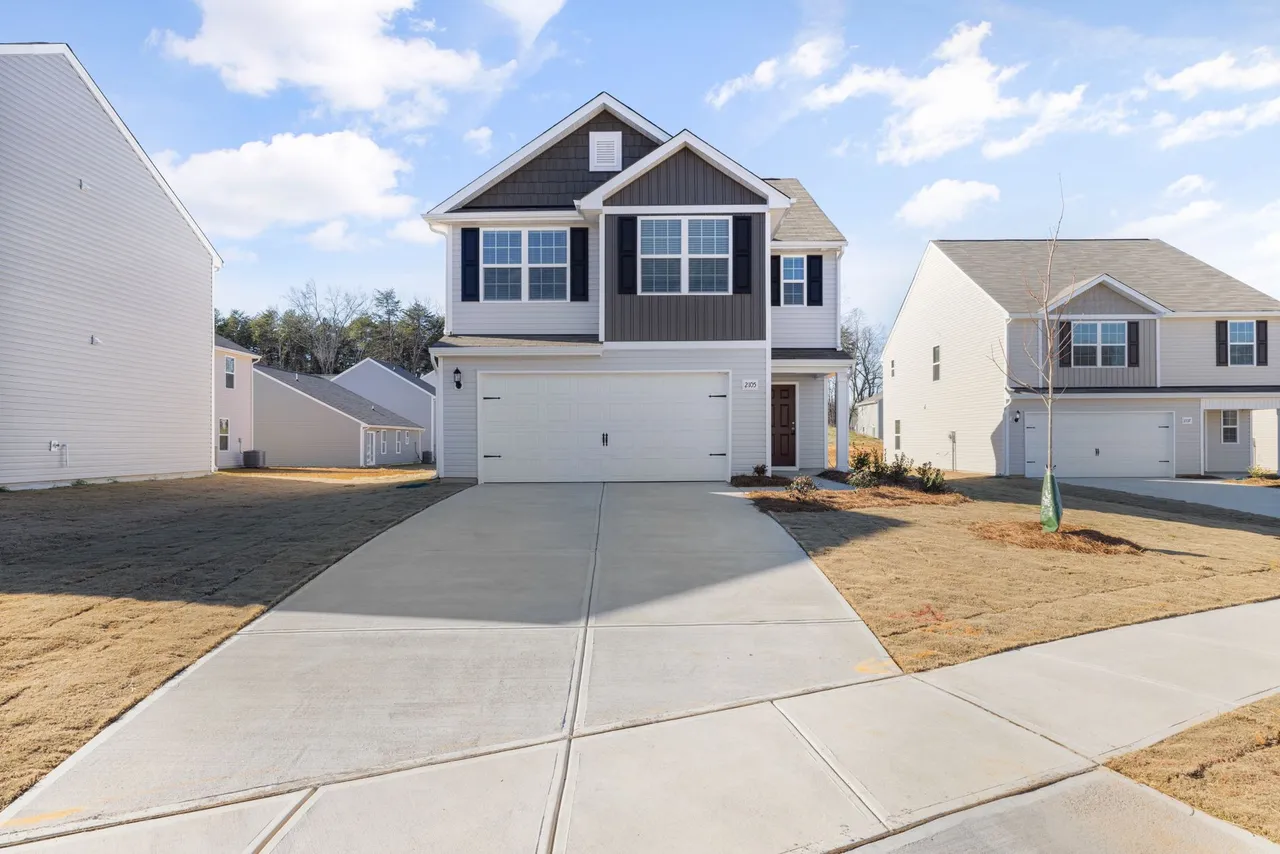
What makes a plain concrete driveway worth planning carefully?
A plain concrete driveway is the most straightforward hard-standing surface choice for most Adelaide properties — no exposed stone, no integral pigment — but “plain” does not mean uncomplicated. Getting the planning right before any contractor arrives determines whether the finished surface suits your household’s daily use, satisfies your council’s crossover requirements, and holds up over decades rather than years. This guide covers the practical decisions you should work through before requesting a quote.
Understanding how you actually use the driveway
Before choosing a mix strength, thickness or finish, think honestly about the loads the surface will carry. A single-car household using a small sedan is a very different engineering brief from a property that regularly receives a loaded trailer, a small truck, or multiple vehicles parked for extended periods.
Some practical questions worth noting down before speaking to a concreter:
- How many vehicles, and what type (car, SUV, van, trailer, boat)?
- Is the surface a pure driveway, or does it also serve as a turning area, parking bay, or pathway junction?
- Do delivery or service vehicles — such as skip bins or concrete pumps — ever need to access it?
- Is there significant cross-fall toward the house or the street?
Your answers to these questions should shape what you ask a licensed concreter to specify, not the other way around. This is not something a referral website can design for your site; it requires a site visit from the person doing the work.
Plain concrete finish options you can actually specify
“Plain” concrete can still vary considerably in surface texture and practical performance. The finish applied before the concrete sets affects slip resistance, appearance, maintenance effort and cost. Common options to discuss with your contractor include:
Broom finish — a stiff brush drawn across the surface while still green creates a linear texture. It is the most common residential finish for good reason: it provides traction in wet weather and hides minor surface variation well.
Steel-trowel finish — produces a smooth, almost polished surface. It looks clean against modern architecture but can become slippery when wet and shows tyre marks and oil stains more readily.
Wet-pressed or hand-floated finish — a slightly more open texture than trowel, often used where a natural appearance is preferred without the coarser look of broom.
Saw-cut control joints — not a finish as such, but the pattern and spacing of control joints (the deliberate cuts that guide where cracking occurs as concrete cures and moves seasonally) affects appearance considerably. Discuss joint layout as part of any quote.
For comparison between plain and decorative options, see the related guide on concrete driveway finish options to discuss and, if you are weighing up an upgrade, the exposed aggregate driveway selection guide.
Council crossover requirements: not optional
The section of your driveway that crosses the footpath verge — the crossover — is not simply an extension of your private property. It sits on public land and council infrastructure, and councils across Adelaide have their own specifications for how that work must be done.
As an example, the City of Port Adelaide Enfield explicitly places responsibility on property owners to construct, repair and maintain crossovers to council requirements. The City of Prospect requires authorisation before any installation, modification or relocation of a driveway and gutter crossover. The Town of Gawler describes stormwater affecting neighbours outside a recent development application as a civil matter between property owners. Council permission for crossover work or a stormwater connection to the street kerb is a separate question.
These are three different councils with their own documents. Your own council may have different — and potentially more restrictive — requirements. The practical implication: check with your responsible council before finalising the scope of work with any concreter, not after. Work done without required authorisation can result in you being required to reinstate the original surface at your own expense.
South Australia’s planning framework also involves multiple assessment pathways depending on the proposal and applicable zone, so what applies to one property may not apply to another even nearby. PlanSA outlines how assessment pathways work at a state level, but site-specific advice belongs with your council or a registered building professional.
A hypothetical scope scenario (illustrative only)
Imagine a homeowner in a northern suburb planning to replace a deteriorating asphalt driveway with plain concrete. They assume the job is simply “pour concrete where the old surface is.” In a planning conversation, they discover:
- The existing crossover does not meet the current council width specification for their street type, so it will need to be widened — requiring council authorisation.
- Stormwater from the driveway currently flows toward a neighbour’s fence rather than to the street, something a new concrete surface would need to correct.
- The existing base under the asphalt has softened in one area, meaning subbase preparation is part of the quote scope, not an optional extra.
This is a hypothetical scenario, not a customer story, but it illustrates why a full scope conversation — covering subbase condition, crossover compliance, drainage direction and control-joint layout — matters before any price discussion makes sense.
What to include in your quote scope
When you approach a concreter for a quote, the scope document or discussion should address at minimum:
- Demolition and removal of the existing surface, if applicable
- Subbase preparation — compaction, fill or stabilisation where needed
- Crossover — whether it is in scope, and whether it requires council notification or approval
- Drainage — how surface water will be managed and directed
- Concrete specification — mix grade, minimum thickness across the slab
- Finish type and control-joint layout
- Curing method — how the concrete will be protected during the curing period
- Site clean-up and when the surface can be driven on
A quote that doesn’t address these items is an incomplete quote. Gaps tend to become variation costs later. See the concrete driveway cost questions guide for more on what drives price differences.
Checking contractor credentials before work begins
The South Australian Government advises consumers to check whether a builder is licensed for the particular work and to ask for explanations of any contract terms that are unclear. This site connects enquirers with contractors but does not verify licences, insurance or qualifications — those checks are yours to perform before signing anything. SA Government’s guidance on choosing a building professional is a useful starting reference.
For driveway replacement and upgrade work, you can submit an enquiry through the Driveway Replacement and Upgrades service page, or start with Concrete Driveway Enquiries if you are starting from scratch.
Getting ready to request a quote
A well-prepared homeowner gets more useful quotes. Before you contact a contractor, have ready:
- A rough sketch or photo of the existing driveway with approximate dimensions
- Notes on the intended uses and any heavy-load requirements
- Your council’s name and any crossover guidance you’ve already found on their website
- A preferred finish type, or at minimum a list of finishes you want the contractor to explain
- Any drainage or neighbour-boundary concerns you’ve noticed
If you are still weighing up plain concrete against alternatives, the coloured concrete sample selection guide covers what to look at before committing to a pigmented finish, should that direction appeal.
Plain concrete is durable, low-maintenance and cost-effective — but those qualities depend on correct planning, appropriate base preparation, and work that meets both your household’s needs and your council’s public-infrastructure requirements.
Further reading
- SA Government — Choosing a building professional: https://www.sa.gov.au/topics/housing/buying-building-selling/building-a-home/choosing-a-building-professional
- City of Port Adelaide Enfield — Footpath and driveway services: https://www.cityofpae.sa.gov.au/services/footpath-driveway-services
- City of Prospect — Work on council land: https://www.prospect.sa.gov.au/development/new-developments/undertaking-work-on-council-land
- Town of Gawler — Land development: https://www.gawler.sa.gov.au/business-development/building-and-planning/land-development
- PlanSA — Assessment pathways: https://plan.sa.gov.au/development_applications/getting_approval/how_applications_are_assessed/assessment_pathways
Discuss your project
This guide helps prepare questions; it is not a site assessment, design specification or professional approval. Read about concrete driveway enquiries in adelaide before making a project enquiry.