
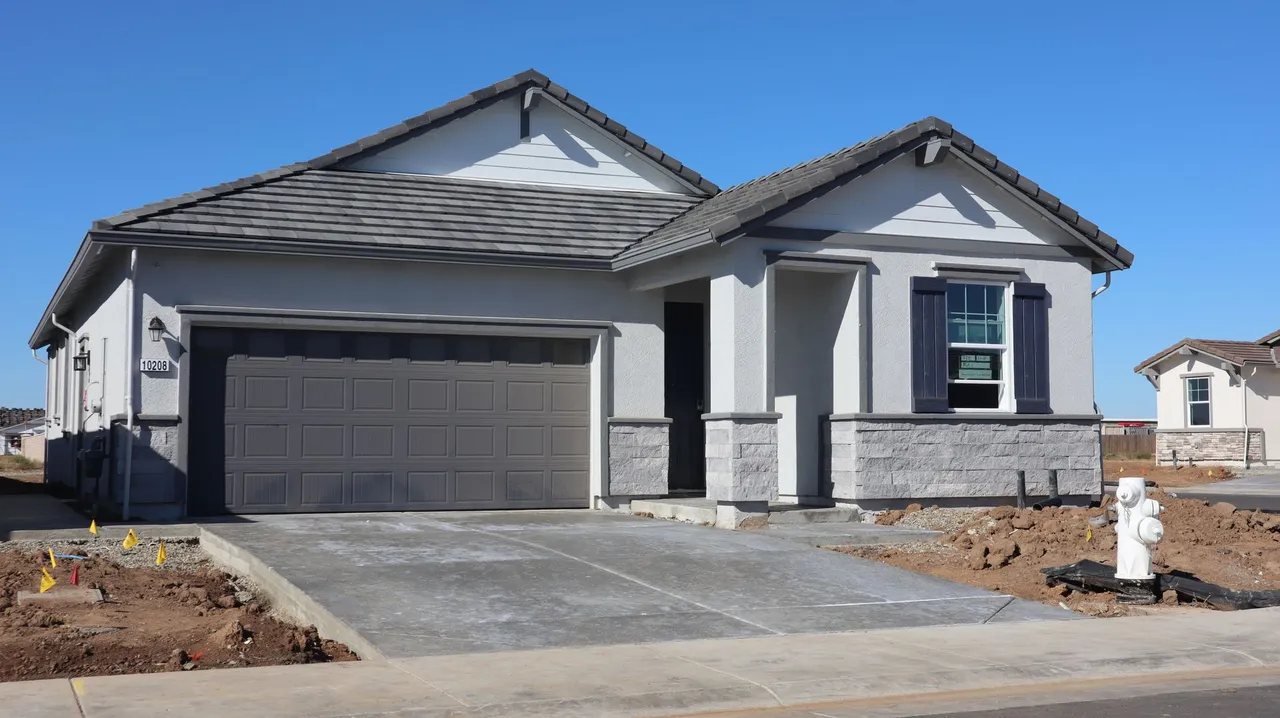
Which concrete driveway finish should you discuss with a contractor?
The finish you choose affects how your driveway looks, how much grip it provides underfoot, how easy it is to clean, and how well it holds up to Adelaide’s warm dry summers and occasional heavy rain events. Understanding the main options before you meet a contractor means you can ask sharper questions and compare quotes on a like-for-like basis. This guide walks through the most common finishes, what distinguishes them, and what ongoing care each one typically involves.
The main finish categories at a glance
Concrete can be left with the texture the placement process creates, or it can be treated mechanically or chemically after the slab cures. That distinction divides finishes into two broad families:
- Formed/tooled finishes – applied before or during curing: broom finish, trowelled finish, exposed aggregate, stencilled concrete.
- Post-cure mechanical finishes – applied to hardened concrete: honed, polished, shot-blasted.
Each family suits different budgets, design goals and maintenance tolerances. Knowing which family you are comparing keeps contractor quotes comparable.
Broom finish: the practical workhorse
A broom finish is produced by dragging a stiff-bristled broom across fresh concrete before it fully sets, creating fine parallel grooves. Those grooves add texture that improves grip even when wet—a relevant consideration for a sloped Adelaide driveway that channels stormwater toward the street.
It is one of the most common finishes precisely because it is straightforward to apply consistently, is easy for future contractors to patch, and suits almost every residential application. The texture does collect fine debris and leaf litter, so occasional hosing or blowing is part of routine care. See our Plain Concrete Driveway Planning guide for more on how broom finish integrates with standard driveway construction.
Exposed aggregate: texture and visual interest
Exposed aggregate finish reveals the decorative stones or pebbles mixed into the concrete by washing or brushing away the surface paste before it fully cures. The result is a naturally textured, non-slip surface with visual depth that broom finish does not provide. Stone colour, size and density can all be varied, giving you a meaningful design conversation to have with your contractor before work starts.
Because aggregate selection affects both appearance and price, it pays to view physical samples rather than relying on photographs. Our Exposed Aggregate Driveway Selection guide explains what to look for when comparing aggregate options. One practical note: the uneven texture traps fine particles more readily than a smooth finish, so periodic pressure washing keeps it looking its best.
Stencilled and pattern-imprinted concrete
Stencilled concrete uses chemical release agents and stencil sheets pressed into or placed on fresh concrete to create defined patterns—cobblestone grids, slate layouts, brick courses and similar looks. The colour is introduced through integral pigments, dry-shake hardeners or chemical stains.
This finish is popular when a homeowner wants the appearance of natural stone or pavers without the jointing and weed-growth issues that can come with individual units. The critical thing to understand is that stencilled concrete is a surface treatment applied to a standard concrete slab, so the structural quality of that slab still matters. A well-executed stencilled finish on a correctly prepared sub-base will outlast an identical-looking job on a poorly compacted base. Ask your contractor how they handle sub-base preparation, not just the decorative layer.
Coloured concrete: pigment versus surface stain
Colour can be introduced in two fundamentally different ways, and they behave differently over time:
- Integral colour is mixed through the entire batch. If the surface chips or wears, the colour beneath remains consistent.
- Surface stain or dry-shake hardener is applied to the top layer only. Wear or abrasion can eventually expose the natural grey concrete underneath.
Discussing which method a contractor proposes, and what maintenance that method requires, is a sensible agenda item for any quote meeting. For more detail on matching colour samples to your home’s exterior, see our Coloured Concrete Sample Selection guide.
Honed and polished finishes
Honed concrete is ground back with diamond tooling after the slab cures to create a flat, smooth, low-sheen surface that reveals the aggregate within. Polished concrete takes that process further with progressively finer grits to produce a reflective finish more commonly seen in indoor applications but occasionally specified for covered outdoor areas and porticos.
For open driveways, honed finishes present a slip risk when wet unless a sealer with added grit or a finishing treatment is applied. Raise this explicitly when speaking to contractors. Maintenance typically involves periodic resealing to protect the surface from oil staining and moisture penetration.
Hypothetical planning scenario
The following is a hypothetical scenario to illustrate how finish decisions interact, not a real customer account.
Imagine a household in a northern Adelaide suburb planning to replace a cracked, plain-grey driveway. They like the look of exposed aggregate but are unsure whether council approval is needed to change the crossover design at the same time. After checking their local council’s website—different Adelaide councils each have their own requirements, and councils such as Port Adelaide Enfield and the City of Prospect each describe owner responsibilities and authorisation processes for crossover works on their sites—they discover they need to contact the council before altering where the crossover meets the kerb. They bring this information to their first contractor meeting, which saves a potential compliance issue later. The contractor advises them to get council sign-off before the slab is poured, not after. The finish decision (exposed aggregate, mid-range stone size, charcoal pigment base) is then confirmed once the site constraints are understood.
This scenario illustrates why finish choices and site compliance questions belong in the same early conversation, not separate ones.
Council crossover considerations and approval
In South Australia, any work that touches the driveway crossover—the section crossing the footpath and kerb to reach the road—may require authorisation from your local council. This is distinct from finishing the private portion of your driveway. South Australia also has multiple planning assessment pathways, and what applies depends on your specific proposal and planning zone. Checking with your council before finalising your driveway design avoids the possibility of having to alter or remove work at your own expense.
When you request a quote, ask whether the contractor’s scope includes the crossover, who is responsible for council applications, and how stormwater from the driveway will be managed so it does not affect neighbouring properties or become a council compliance issue.
Preparing for your first contractor meeting
A focused first meeting produces a more accurate quote. Consider preparing answers to these questions before you go:
- What finish do you think you want, and have you seen it in person on an existing driveway?
- Do you need the crossover altered, widened or relocated?
- Are you planning to seal the finish, and how often are you prepared to reseal?
- Does the driveway slope, and do you have an existing stormwater outlet or drainage channel?
- What is the existing sub-base condition—is there failed base material to remove?
Taking photographs of your current driveway and any adjacent surfaces (paths, garden edges, house colour) also helps a contractor suggest finishes that complement the existing environment rather than clash with it.
To understand what factors typically influence pricing before requesting quotes, see our Concrete Driveway Cost Questions guide. When you are ready to connect with a contractor, submit a Concrete Driveway Enquiry or explore Driveway Replacement and Upgrade options if you are working with an existing slab.
Further reading
- SA Government – Choosing a building professional: guidance on checking licences and understanding contract terms before committing to a contractor.
- City of Prospect – Undertaking work on council land: example of how one Adelaide council handles authorisation for crossover alterations.
- Port Adelaide Enfield – Footpath and driveway services: describes owner responsibilities for crossover construction and maintenance.
- PlanSA – Assessment pathways: overview of South Australia’s planning approval framework.
Discuss your project
This guide helps prepare questions; it is not a site assessment, design specification or professional approval. Read about concrete driveway enquiries in adelaide before making a project enquiry.